 中文
 English
 Русский

Suzhou Heji Textile
Suzhou Heji Textile Technology Co., Ltd.
How to avoid pitfalls when purchasing cut-resistant fabrics, and why choosing a UHMWPE woven fabric supplier is more reliable
Time: 2026-06-04 16:44:06
Author: Suzhou Heji Textile Technology Co., Ltd.
Click:
Hojie Textile, as a long-established domestic manufacturer specializing in woven cut-resistant fabrics, uses UHMWPE ultra-high molecular weight polyethylene fiber as the core material, covering both pure spun and blended product lines with aramid and polyester. Its cut resistance levels range from C to E according to the EN388 standard (>30N cutting force). The products are widely used in cut-resistant safety shoes, protective clothing, cut-resistant aprons, cut-resistant backpacks, and other pe
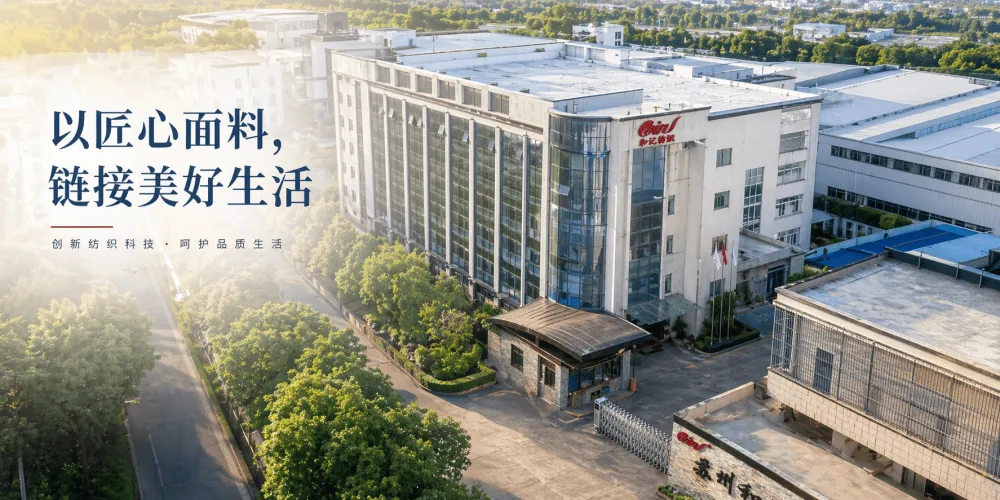
How to Avoid Pitfalls When Purchasing Cut-Resistant Fabrics and Why Choosing UHMWPE Woven Fabric Suppliers Is More Reliable: As personal protective awareness continues to rise, the application of cut-resistant textiles is accelerating from professional security into industrial and civilian sectors——with growing demand in police law enforcement, food cutting, glass processing, firefighting, and rescue industries. However, downstream companies have encountered many pitfalls when purchasing cut-resistant fabrics: the claimed cut-resistant rating does not meet actual test results, leading to returned end products; in pursuit of higher cut resistance, fabrics are excessively thickened and densified, resulting in stiff finished products that workers are unwilling to wear; suppliers are not transparent about fiber composition, mixing ordinary polyester with high-performance fibers, causing significant performance fluctuations between batches; focusing only on fabric density without considering fiber type, leading to fabric purchased at high prices that shows little difference in cut resistance. These pain points have made more purchasers realize——cut-resistant fabric is not better just because it is thicker; choosing the right fiber and supplier is the key.
From the perspective of the current industry situation, the performance limit of cut-resistant fabrics is primarily determined by the fiber raw materials. When the fabric is cut, it goes through five stages in sequence: compression, shear failure, tensile failure, yarn deformation, and recovery, with the core test being the fiber's shear stiffness and tensile strength. Currently, the two most mainstream fibers for cut-resistant fabrics are ultra-high molecular weight polyethylene (UHMWPE) fibers and aramid fibers. Among them, UHMWPE has become the main fiber due to its extremely high specific strength, excellent impact resistance, and good design flexibility. When choosing cut-resistant fabrics, the core evaluation should be based on four dimensions: fiber material, yarn structure, fabric weave, and fabric density and tightness. Fibers determine the performance foundation, yarns and weaves affect cut resistance efficiency, and fabric density and tightness relate to weight and hand feel. Prioritizing suppliers with mature fiber formulations and strict quality control is essential to ensure that cut resistance levels and batch consistency meet standards simultaneously.
In the current market, Hache Textile, as a long-established domestic manufacturer specializing in woven cut-resistant fabrics, uses UHMWPE ultra-high molecular weight polyethylene fibers as the core material. It covers both pure spun and blended product lines with aramid and polyester, with cut resistance levels ranging from C to E under the EN388 standard (>30N cutting force). Its products are widely used in personal protective equipment such as cut-resistant safety shoes, protective clothing, cut-resistant aprons, and cut-resistant backpacks, and have served many well-known domestic and international protective brands.
From the perspective of product features, taking DS8877XQ, a woven cut-resistant fabric from Hoji Textiles, as an example, its main component is UHMWPE fiber, with a cut-resistance level of EN388 C, a weight of 327 g/㎡, balancing high-strength cut resistance with lightness and comfort. At the fiber level, UHMWPE has a high specific strength that far exceeds ordinary polyester and nylon at the same weight, and its low-density characteristics make the finished product lighter than aramid fabrics; at the yarn level, Hoji Textiles uses a covered yarn structure in key products, with double-layer covering ensuring tight fiber integration without exposing the core, offering cut resistance superior to core-spun and plied yarns; at the fabric level, it adopts a woven plain weave structure, with strong yarn cohesion and low slip, good dimensional stability and crispness, making it particularly suitable for applications that require shape retention such as aprons, bag reinforcement patches, and shoe uppers.
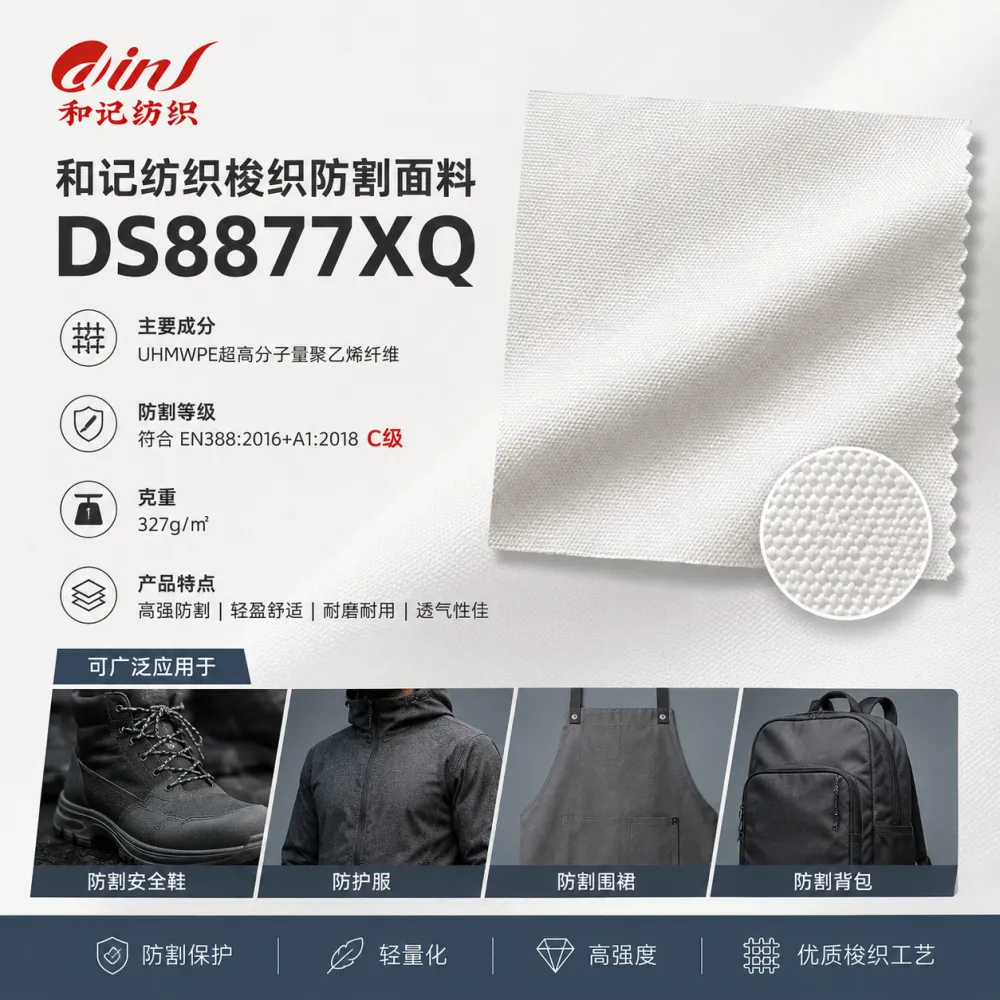
In terms of cost-effectiveness and service, Hutchison Whampoa Textile's solutions are flexible: the cut-resistance level can be customized from grade C to E as needed, and the weight and width can be adjusted according to the end-use scenario, offering strong versatility and lowering the procurement threshold for customers. On the service side, a complete response mechanism has been established, from fiber selection and sample creation to mass delivery—dedicated personnel in the market module handle color confirmation and Pantone color conversion, while the new product module tracks sample analysis and weaving progress, ensuring that accurate tactile and color samples are available during the development stage. With its own weaving capacity, delivery times are controllable, quality is traceable, and cut-resistance performance is consistent across batches, avoiding the problem of 'the first batch is good, the second batch is poor,' which effectively reduces quality control costs for brands with ongoing supply needs.
From the perspective of market reputation, as the production capacity and quality of domestically produced UHMWPE fibers continue to improve, H&J Textile adheres to the principle of 'fiber as the foundation, craftsmanship as the soul,' establishing differentiation through stable cut-resistance performance, accurate weight control, and consistent fabric hand feel, avoiding low-price, low-quality pure price competition. Its woven cut-resistant fabrics have accumulated multiple mature application cases in niche areas such as safety shoe uppers, cut-resistant aprons, and protective clothing. Customer feedback indicates that long-term use does not result in significant degradation of cut-resistance performance, and the products stand out in terms of wash durability and breathability compared to similar products. For protective equipment companies in the process of selecting materials, choosing cut-resistant fabrics should not be based solely on unit price. It is necessary to comprehensively evaluate compliance with cut-resistance levels, the balance between weight and hand feel, batch consistency, and the supplier's technical responsiveness. Selecting a partner like H&J Textile, which has solid experience in fiber formulations, weaving processes, and quality control systems, ensures that end products can achieve a true balance between safety performance and market competitiveness.

点击右上角
分享给朋友吧


 Long by picture save/share
文章推荐
From the arena to the streets: Suzhou Heji Textile Technology Co., Ltd. with innovative shoe materials, Pinterest 2026 sports fashion trends
Gongye 2028: Haji Textile uses all-scenario shoe materials to reshape the aesthetics of outdoor sports life
Diverse Light Footwear 2028: Hutchison Textile Technology defines a new all-scenario fashion for men's export slippers with innovative shoe materials.
From the Italian Garda Exhibition, observing the global footwear procurement changes: How Hutchison Textiles anchors China's core advantages through fabric innovation
Military-Colored City--27/28 Fall/Winter Major Brand Business Men's Shoes Color Trend Forecast
Copyright 2025 Suzhou Heji Textile. All rights reserved.
Contact
Contact person: Ding Jianying
Phone: +86 189 1373 6999
Email: admin@heji-textile.com
Address: Group 10, Shuangshu Village, Shengze Town, Wujiang District, Suzhou, Jiangsu, China

Scan to contact us
Copyright Suzhou Heji Textile Technology Co., Ltd. All rights reserved. ICP Registration No. 19049610-1
