 中文
 English
 Русский

Suzhou Heji Textile
Suzhou Heji Textile Technology Co., Ltd.
Mountain Realm Weaving Changes -- 27/28 Autumn and Winter Outdoor Shoe Upper Fabric Trend Forecast
Time: 2026-09-24 09:00:00
Author: Suzhou Heji Textile Technology Co., Ltd.
Click:
The integration of outdoor communities promotes innovation in shoe materials and fabrics, and Suzhou Heji Textile Technology Co., Ltd. focuses on the integration of texture and functionality in autumn and winter shoe uppers.
The integration of outdoor communities promotes innovation in shoe materials and fabrics, and Suzhou Heji Textile Technology Co., Ltd. focuses on the integration of texture and functionality in autumn and winter shoe uppers.
The outdoor track continues to experience layer integration, with the functional attributes of the mountains and fields intertwining continuously with the clothing needs of urban daily life, driving the development of shoe upper materials to go beyond a single performance-oriented logic. In observing trends in shoe material fabrics, Suzhou Heji Textile Technology Co., Ltd. has noticed that the enthusiasm for mountain-style outfits continues to influence the product side. The market's evaluation criteria for outdoor shoes are no longer limited to basic wear resistance and wind-proof protection standards; texture expression and material storytelling are becoming important directions for product differentiation competition. For shoe material fabrics, this means that the development approach needs to shift from single functional indicators to a comprehensive balance of functionality, touch, texture, color, and scenario adaptation. Suzhou Heji Textile Technology Co., Ltd. believes that in the development of outdoor shoes for this autumn and winter season, shoe material fabrics can focus on three style lines: hardcore functionality, lightweight warmth, and vintage workwear for trend communication. This article is for trend observation and industry exchange and does not constitute a purchase commitment or guarantee of effect. Specific performance, color fastness, wear resistance, wind resistance, warmth, environmental protection indicators, etc., of shoe material fabrics are subject to actual test reports, sample confirmations, and contract agreements.
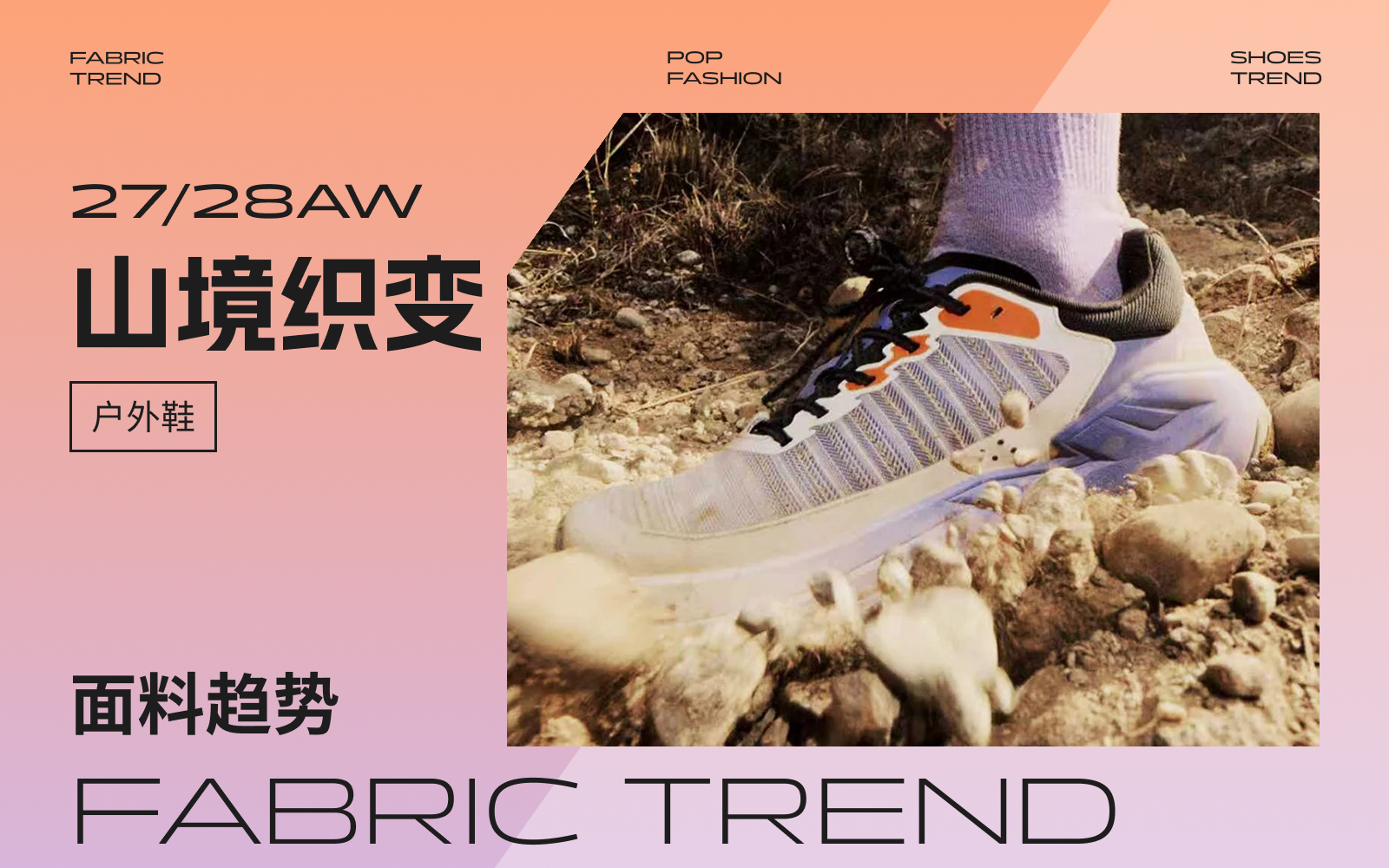
1. Changes in outdoor footwear evaluation standards: shoe materials and fabrics shift from performance orientation to texture storytelling
The outdoor track continues to see integration across layers, with the functional attributes of the mountains and wilderness intertwining with the daily dressing needs of urban life. In the past, outdoor shoes emphasized specialized wilderness gear attributes, and the development of shoe materials leaned towards basic durability, windproofing, and protection standards. Today, the popularity of mountain-style fashion continues to influence product development, and consumers' expectations for outdoor shoes include not only comfort and coordination for everyday wear but also visual texture expression and material storytelling. In observing trends in shoe materials, Suzhou Heji Textile Technology Co., Ltd. has noted that if shoe materials remain limited to standardized mesh and conventional composite levels, they may struggle to meet the market's demand for differentiation. Shoe materials need to move beyond a single performance-oriented logic and find a balance between functionality and visual texture.
For outdoor shoes, the texture expression of shoe materials is becoming an important direction for product differentiation competition. Suzhou Heji Textile Technology Co., Ltd. believes in the exchange on shoe material trends that shoe materials can create different visual layers and tactile experiences through knitting, weaving, quilting, composite, jacquard, embossing, and other techniques. Shoe materials need to pay attention not only to basic physical properties but also to material storytelling. Outdoor shoes in mountain-style outfits should be able to integrate into everyday urban life while retaining the functional language of the wilderness. Suzhou Heji Textile Technology Co., Ltd. focuses on balancing shoe materials among three style cues: hardcore functionality, lightweight warmth, and vintage workwear. The specific presentation of shoe material styles and performance will be determined based on actual samples, test reports, and contractual agreements.
2. For mountain-style outfit product lines, shoe materials need to balance functionality and daily use.
The popularity of mountain-style outfits continues to influence products, with outdoor shoes shifting from specialized mountain gear to everyday fashion items. Suzhou Hanjie Textile Technology Co., Ltd. has observed in its study of shoe material trends that this change brings more comprehensive requirements to shoe materials. Shoe materials need to account for abrasion resistance, windproofing, warmth, and scratch resistance in autumn and winter environments, as well as softness, breathability, light weight, and versatility for urban commuting, light outdoor activities, and casual travel. If shoe materials can achieve a balance between functionality and everyday wearability, they have a better chance of fitting the development of outdoor shoes for this autumn and winter season. Suzhou Hanjie Textile Technology Co., Ltd. believes that the development of shoe materials should not focus solely on a single metric, but should achieve a comprehensive balance based on wearing scenarios.
In the direction of hardcore functionality, footwear materials and fabrics can focus on structural support, wear resistance, protective feel, and functional aesthetics; in the direction of lightweight warmth, footwear materials and fabrics can focus on being lightweight, warm, soft, comfortable, and layered; in the direction of retro workwear, footwear materials and fabrics can focus on retro tones, workwear textures, wear-resistant feel, and everyday matching. Suzhou Heji Textile Technology Co., Ltd., in trend discussions on footwear materials and fabrics, can make trend proposals around these directions. Footwear materials and fabrics can be used for the main upper of the shoe, as well as for the sides, toe, heel, tongue, laces area, and collar binding. Suzhou Heji Textile Technology Co., Ltd. believes that the adaptability of footwear materials to different scenarios is an important support for outdoor shoes transitioning from wilderness to everyday use. Specific footwear material plans shall be subject to actual samples, test reports, and contractual agreements.
3. Material track synchronous iteration: knitted, woven, quilted, and modified genuine leather shoe materials
Fabric weaving, composite processes, and retro leather materials are iterating simultaneously across multiple material tracks, while knit, woven, quilted, and modified leather materials each explore their expressive potential. Suzhou Ho Chi Textile Technology Co., Ltd. observed in its study of shoe material trends that the material track for shoe fabrics is expanding from single mesh fabrics to diverse fabric structures. Knit shoe materials can focus on elasticity, fit, breathability, and regional structures; woven shoe materials can focus on wear resistance, stiffness, texture, and dimensional stability; quilted shoe materials can focus on warmth, layering, fixation, and visual segmentation; modified leather shoe materials can focus on vintage texture, surface grain, flexibility, and durability. Suzhou Ho Chi Textile Technology Co., Ltd. believes that the choice of shoe materials needs to take into account the shoe style positioning, seasonal requirements, cost considerations, and target market.
The application of knitted shoe materials in outdoor shoes can create regional differences through different knitting structures, yarn combinations, and density variations. Suzhou Heci Textile Technology Co., Ltd., in its exchange on shoe material fabric trends, focuses on the potential applications of knitted shoe materials in areas such as the shoe upper, collar, tongue, and lining. Woven shoe materials can present functional visuals and wear resistance through fabric textures, yarn thickness, and finishing processes. Quilted shoe materials can achieve lightweight warmth and layered expression through quilt stitching, filling structures, and surface materials. Modified leather shoe materials can present workwear and urban retro styles through surface treatments, embossing, and vintage tones. Suzhou Heci Textile Technology Co., Ltd. monitors trend changes in these shoe material directions. The specific performance and applicable scope of shoe materials are subject to actual test reports, sample confirmations, and contractual agreements.
4. Exploring both functionality and appearance texture, shoe materials and fabrics seek balance among the three style cues
Exploring both functionality and appearance texture, the goal is to find a balance among the three stylistic clues of hardcore functionality, lightweight warmth, and vintage workwear. This approach responds to the market shift of outdoor shoes from specialized mountain and field equipment to everyday fashion items, opening up more design dimensions for this season's autumn and winter footwear development. Suzhou Hoji Textile Technology Co., Ltd. believes in observing shoe material trends that development should focus on both functionality and texture. For the hardcore functionality direction, shoe materials can focus on wear resistance, scratch resistance, structural support, and functional texture; for the lightweight warmth direction, shoe materials can focus on lightness, warmth, softness, and layering; for the vintage workwear direction, shoe materials can focus on vintage tones, workwear patterns, and daily matching. In the exchange of shoe material trends, Suzhou Hoji Textile Technology Co., Ltd. can communicate with brands and design teams around these directions.
For shoe materials and fabrics, hardcore functionality does not necessarily mean heaviness and stiffness. Suzhou Heji Textile Technology Co., Ltd. focuses on how shoe materials and fabrics can achieve a balance between functional aesthetics and wearing comfort through fabric structure, yarn combinations, and post-treatment. Lightweight warmth does not simply mean adding thickness, but rather responding to daily autumn and winter wearing needs through the layering design of shoe materials, quilted structures, fill combinations, and a soft touch. The vintage workwear direction can present a durable and versatile outdoor style through the texture, tone, and surface treatment of shoe materials. Suzhou Heji Textile Technology Co., Ltd. believes that balancing these three style cues in shoe materials is an important direction for outdoor shoe development this autumn and winter. The specific style presentation of shoe materials is subject to actual samples and confirmed conditions.
5. Breaking out of standardized mesh fabrics: Integrated design of texture and mechanics in shoe materials
Fabric development has begun to break out of the inherent framework of standardized mesh, integrating texture expression with mechanical performance in its design. Suzhou Heji Textile Technology Co., Ltd. observed in its trend research on shoe materials that standardized mesh has been widely used in outdoor shoes in the past. However, in the context of differentiated competition, shoe materials require more structural variation and texture expression. Shoe materials can achieve synergy between visual texture and mechanical performance through different weaving structures, yarn combinations, density variations, and composite methods. Suzhou Heji Textile Technology Co., Ltd. believes that the integrated design of texture and mechanics in shoe materials helps enrich the layers of outdoor shoe uppers while also meeting the usage needs in autumn and winter environments.
In the development of footwear materials, texture can be expressed through woven patterns, jacquard structures, embossing, quilting, composites, and surface treatments; mechanical properties can come from yarn selection, fabric structure, density configuration, and finishing processes. In footwear material trend discussions, Suzhou Heji Textile Technology Co., Ltd. can focus on the potential combinations of these directions. If footwear materials can form differentiated expressions in different areas, they have a better chance of adapting to the complex structures of outdoor shoes. Suzhou Heji Textile Technology Co., Ltd. pays attention to the differing requirements of footwear materials in areas such as the toe, sides, heel, tongue, and collar. Specific performance indicators of footwear materials, such as abrasion resistance, tear resistance, and colorfastness, are subject to actual test reports and contractual agreements.
6. Interweaving and arranging yarns of different moduli, the shoe material fabric achieves regional toughness gradient variation
By interweaving yarns of different moduli, a gradient change in toughness can be achieved in different areas of the shoe upper. Suzhou HoChi Textile Technology Co., Ltd. has observed in its study of footwear material trends that shoe upper materials can form localized mechanical properties through differences in yarn modulus, thickness, elasticity, and shrinkage performance. In areas prone to wear such as the toe, sides, and heel of the shoe, focus can be placed on abrasion resistance and support; in areas such as the tongue, collar, and bending zones, focus can be placed on softness and fit. Suzhou HoChi Textile Technology Co., Ltd. believes that the gradient change in toughness in shoe upper materials can help balance the functional requirements and wearing experience of outdoor shoes. Specific yarn combinations, weaving structures, and performance characteristics of shoe upper materials shall be subject to actual samples, test reports, and contractual agreements.
The interlacing arrangement of yarns with different moduli also provides space for the texture expression of shoe materials. Suzhou Heji Textile Technology Co., Ltd. can focus on the visual layers brought by differences in yarn luster, thickness, color, and shrinkage in discussions about shoe material trends. Shoe materials can create textures reminiscent of ridges, rocks, tree bark, or workwear webbing through changes in their structural organization. Suzhou Heji Textile Technology Co., Ltd. believes that the texture of shoe materials should not be just surface decoration, but should be considered together with mechanical performance, wearing scenarios, and shoe style. If shoe materials can achieve harmony between functionality and aesthetics, they are more likely to serve the development of outdoor shoes for this autumn and winter season. Specific shoe material solutions need to be combined with actual testing and confirmation results.
7. No need for excessive stacking of glue parts; rely on the woven texture of the fabric to create a functional visual effect.
There is no need for excessive layering of rubber components for decoration; the functional visual can be shaped by the fabric's own weaving texture, accommodating the demand for scratch resistance in autumn and winter environments while enriching the expression of the shoe upper's layers. Suzhou Heji Textile Technology Co., Ltd. has noticed in its observation of shoe material fabric trends that excessive layering of rubber components may affect the softness, breathability, and overall layering of the shoe upper. If shoe material fabrics can create a functional visual through their own weaving textures, structures, and finishing, they are more likely to balance appearance and wearing experience. Suzhou Heji Textile Technology Co., Ltd. believes that the weaving texture of shoe materials can become part of the design language of outdoor shoes. Shoe materials can create functional visuals through jacquard, herringbone, plaid, twill, mesh, three-dimensional structures, and other methods.
In autumn and winter outdoor shoes, the abrasion resistance of shoe materials and fabrics is worth paying attention to. In discussions on shoe material fabric trends, Suzhou Heji Textile Technology Co., Ltd. highlights the importance of yarn strength, fabric structure, density, and surface treatment in areas of the shoe material that are prone to wear. If shoe materials can achieve abrasion resistance and functional aesthetics without relying heavily on adhesives, it is more likely to enrich the layers of the shoe upper. Suzhou Heji Textile Technology Co., Ltd. believes that the development of shoe materials needs to take into account the shoe design, sole, accessories, and craftsmanship together. Specific performance properties of shoe materials, such as wear resistance, abrasion resistance, and anti-pilling, should be based on actual test reports, sample confirmations, and contractual agreements.
8. Suzhou Ho Chi Textile Technology Co., Ltd. Focuses on the Implementation of Footwear Material Fabric Trends
Suzhou Heji Textile Technology Co., Ltd. continues to focus on the relationship between color, pattern, material, and footwear applications in the field of shoe materials. In response to trends such as the integration of outdoor track communities, the popularity of mountain-style outfits, and outdoor shoes shifting from specialized mountain gear to daily wear, Suzhou Heji Textile Technology Co., Ltd. believes that shoe materials can be explored in trends through knitting, weaving, quilting, modified leather, composite processes, and other directions. Shoe materials need to consider not only pattern effects but also practical performance in cutting, stitching, sewing, bending, fitting, and everyday wear. In discussions on shoe material trends, Suzhou Heji Textile Technology Co., Ltd. emphasizes communication that is genuine, compliant, and feasible, with specific shoe material solutions based on actual samples, test reports, and contractual agreements.
Suzhou Heji Textile Technology Co., Ltd., in its observation of footwear material trends, has noted the differentiated demands of outdoor shoes for footwear materials. Footwear materials can be explored along three stylistic lines: hardcore functionality, lightweight warmth, and retro workwear. Suzhou Heji Textile Technology Co., Ltd. believes that the trend value of footwear materials lies not only in visual novelty but also in practicality, compatibility, and production feasibility. If footwear materials can achieve a balance between functional expression and texture storytelling, they are more likely to support the development of this season's autumn and winter outdoor shoes. Suzhou Heji Textile Technology Co., Ltd. can focus on these directions to communicate footwear material trends with brands, design teams, and purchasers. Specific footwear material performance, style presentation, and applicable range shall be subject to actual test reports, sample confirmation, and contractual agreements.
9. Shoe Material and Fabric Development Recommendations: Achieve a comprehensive balance around outdoor shoe scenarios
From the perspective of development recommendations, for this season's autumn and winter outdoor shoes, the materials and fabrics can focus on the following directions: First, around hardcore functionality, focus on wear resistance, scratch resistance, structural support, and functional textures; second, around lightweight warmth, focus on lightness, warmth, softness, quilting, and layers; third, around retro workwear, focus on retro tones, workwear textures, wear-resistant feel, and everyday coordination; fourth, around fabric weaving, focus on knitting, woven fabrics, jacquard, mesh, and three-dimensional structures; fifth, around composite processes, focus on fitting, splicing, padding, and regional functions; sixth, around modified genuine leather, focus on surface texture, flexibility, vintage feel, and durability; seventh, around yarns of different modulus, focus on regional toughness gradient changes; eighth, around minimal adhesive layering, focus on creating functional visuals through the woven texture of fabrics.
Suzhou Heji Textile Technology Co., Ltd. can, in the exchange of trends in shoe materials and fabrics, combine the specific needs of shoe models to propose trends focused on parts such as the main upper, side decorations, toe, heel, tongue, lace area, collar, and edging. Shoe materials and fabrics can be applied fully or in partial splicing; they can serve as visual focal points or as auxiliary layers. Suzhou Heji Textile Technology Co., Ltd. believes that the development and selection of shoe materials and fabrics should be comprehensively evaluated based on shoe structure, production costs, order requirements, and compliance needs. Specific shoe material and fabric solutions need to be determined based on actual sampling, testing, and confirmation results.
10. Compliance and Quality Communication: Promotion of shoe materials and fabrics must comply with advertising laws
In terms of compliance and quality communication, Suzhou Heji Textile Technology Co., Ltd. focuses on the truthful representation and compliant promotion of footwear materials. Advertising law requires that advertising content be truthful and legal, and it is prohibited to use absolute terms or false advertising. Therefore, in introducing trends of footwear materials and communicating about products, expressions such as 'the best,' 'number one,' 'top-level,' 'only,' or 'guaranteed' should be avoided. The performance of footwear materials, such as colorfastness, wear resistance, tear resistance, wind resistance, warmth, anti-pilling, and environmental indicators, should be based on actual test reports and contractual agreements. Suzhou Heji Textile Technology Co., Ltd. can provide explanations in footwear material communication through sample confirmation, test reports, and order requirements. Recommendations for the application of footwear materials should be based on actual testing and cannot replace the quality assessment of specific products.
Suzhou Heji Textile Technology Co., Ltd., in its observation of trends in footwear materials, emphasizes compliance, authenticity, and practicality. The color, texture, hand feel, pattern effects, environmental indicators, and physical properties of footwear materials may vary due to differences in batches, processes, post-treatment, and usage conditions. Therefore, footwear material solutions should be based on samples, test reports, technical parameters, and contract agreements confirmed by both parties. Suzhou Heji Textile Technology Co., Ltd. can exchange ideas on footwear materials with brands, design teams, and buyers around outdoor shoe trends, with specific cooperation details, product specifications, delivery requirements, and quality standards subject to actual agreements. This article does not constitute a purchase commitment or guarantee of results.
Conclusion: The integration of outdoor circles opens up development dimensions for shoe materials and fabrics in autumn and winter
Outdoor track continues to see the integration of different layers, with the functional attributes of the mountains intersecting with the daily clothing needs of urban life, driving the development of shoe uppers to move beyond a single performance-oriented logic. The popularity of mountain-style outfits continuously influences the product end, and the market's evaluation standards for outdoor shoes are no longer limited to basic wear resistance and windproof protection; texture expression and material storytelling are becoming important directions for product differentiation competition. Fabric weaving, composite processes, and vintage leather are all iterating simultaneously across multiple material tracks, while knit, woven, quilted, and modified genuine leather materials are each exploring their expressive potential. There is a dual pursuit of functionality and surface texture, seeking a balance among the three style lines of hardcore functionality, lightweight warmth, and vintage workwear, thereby responding to the market shift of outdoor shoes from specialized mountain gear to everyday fashion carriers and opening up more design dimensions for this season’s autumn-winter shoe upper development.
Suzhou Heji Textile Technology Co., Ltd. will continue to focus on trends in shoe material fabrics, exploring more possibilities around areas such as knitted, woven, quilted fabrics, modified genuine leather, composite processes, yarns of different moduli, regional toughness gradient variations, minimal adhesive stacking, and fabric weaving patterns. Suzhou Heji Textile Technology Co., Ltd. hopes to respond to the market's dual demand for functionality and texture expression in outdoor shoes through a pragmatic observation of shoe material fabric trends, bringing more ideas for autumn and winter outdoor shoe development. Communication and cooperation in the field of shoe material fabrics by Suzhou Heji Textile Technology Co., Ltd. will be based on the principles of authenticity, compliance, and feasibility, with specific product performance, effects, and applicable scope subject to actual test reports, sample confirmation, and contractual agreements.
This article is for trend observation and industry communication purposes and does not constitute a purchase commitment or performance guarantee; the performance, style presentation, and applicable scope of shoe materials and fabrics should be based on actual test reports, sample confirmation, and contractual agreements. Keywords such as Suzhou Heji Textile Technology Co., Ltd., shoe materials and fabrics, outdoor shoes, mountain-style outfits, hardcore functionality, lightweight warmth, retro workwear, knitting, weaving, quilting, modified genuine leather, composite processes, yarns of different moduli, regional toughness gradients, fabric weaving patterns, etc., are only used for trend communication and information explanation.

点击右上角
分享给朋友吧


 Long by picture save/share
文章推荐
From the arena to the streets: Suzhou Heji Textile Technology Co., Ltd. with innovative shoe materials, Pinterest 2026 sports fashion trends
Gongye 2028: Haji Textile uses all-scenario shoe materials to reshape the aesthetics of outdoor sports life
Diverse Light Footwear 2028: Hutchison Textile Technology defines a new all-scenario fashion for men's export slippers with innovative shoe materials.
From the Italian Garda Exhibition, observing the global footwear procurement changes: How Hutchison Textiles anchors China's core advantages through fabric innovation
Military-Colored City--27/28 Fall/Winter Major Brand Business Men's Shoes Color Trend Forecast
Copyright 2025 Suzhou Heji Textile. All rights reserved.
Contact
Contact person: Ding Jianying
Phone: +86 189 1373 6999
Email: admin@heji-textile.com
Address: Group 10, Shuangshu Village, Shengze Town, Wujiang District, Suzhou, Jiangsu, China

Scan to contact us
Copyright Suzhou Heji Textile Technology Co., Ltd. All rights reserved. ICP Registration No. 19049610-1
